
What is this place?
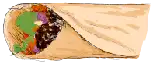
https://falafel.fyi/ is a list of all the places I’ve eaten falafel wraps. There are 99 of them. Just one more and then I’ll be happy, right?
I’ve eaten a lot of falafel in my time. I’ve done other things, too. I’ve picked gooseberries in the summer sun, climbed mountains in the driving rain, and seen whales breach the surface of the desperate North Atlantic. I’ve laughed, and cried, and loved, and lost. I’ve even made websites. But if nothing else, I’ve eaten a lot of falafel wraps. And I’ve enjoyed (almost) every single one.
My childhood was mostly falafel-free. When I lived in Cornwall, for university, I could rely on pasties for sustenance. But then I moved to London, and after a few days I started getting hungry. What would I pick up for lunch? What would I take with me on a walk? What would I eat at 3am? Falafel wraps are cheap, filling, vegetarian, ubiquitous. In short, a revelation. They occupy a very specific ecological niche.
I haven’t been to Egypt, or Lebanon, or Palestine, or Yemen, or Israel, or Syria. I probably haven’t had real falafel. Critics will denounce me for a falafel map that’s mostly set in England. And they’ll be right. I’m a faux-falafel philistine, a Levantine lout, a Coptic cheat. I’m eating fake falafel, fib falafel, fraud falafel. My falafel is pantomime falafel, costume falafel, imitation falafel. I’m watching shadows of falafel on the wall of Plato’s cave, and I have the audacity to make a website called https://falafel.fyi/.
Colophon
I built this website, in the late summer of 2026, to hold all the places I’ve eaten a falafel wrap. Originally, it existed as a list of saved places on Google Maps (you can see that here).
This website is an Astro project. The “reviews” are still stored in Google Maps; every night, the list is synced with this website. I used maplibre and Google Maps’ satellite tiles for the falafel map, and drew the icons in Procreate. I used this tool to generate the lines between entries.
I bought my first ever font, Dan Cederholm’s Kyroh, for this project. Body text is set in Atkinson Hyperlegible Soft, created by the Braille Institute and modified by Ky Decker for Namesake.
I created the Planet Falafel gif, on the homepage, using Blender, and designed the various ‘stamps’ around it to look like falafel shop signs, typeset in Atkinson, Arial, Comic Sans, and Junicode, the font for medievalists. I’m also using this photograph of busts of Egyptian royals, screenshots of the title sequence from Twin Peaks, the Mamdani sign generator, etc. I was inspired by the stickers on the Fraunces specimen page, created by Undercase Type.
This is a small-batch website, made with love and human hands. The source code is available at https://github.com/probablyduncan/falafel.
Origins
Falafel is old. It’s elemental, primordial. It’s not hard to picture falafel in the time of dust storms and plagues of locusts, of peasants and prophets. I can see it now, being fried on the streets in the cities of gods, peddled on the steps of the ziggurats, being sold, sub-standard, by Ea-nāṣir. Every granite block of the food pyramid is represented in the humble falafel wrap, and it doesn’t take much imagination to picture a pharaoh raising one to his lips as he watches his pyramids rise.
When you search online for the origins of falafel, you end up on Reddit and Quora and recipe blogs, where everyone is talking about the Coptic Christians. About a thousand years ago, the theory goes, these Coptic Christians of medieval Egypt first created falafel as a meat substitute for Lent. “With legumes like chickpeas and fava beans they already knew at the time, they must have developed countless meatless dishes for their Lent fasting days” writes Iraqi food historian Nawal Nasrallah. “It is not far-fetched to believe that the now ubiquitous falafel has been developed by them.”
Yeah, that’s right. Footnotes.
Falafel, says Nasrallah, may be an instance of muzawwarat (مزورات, literally counterfeit) vegetarian dishes designed to imitate meat. In the medieval Middle East, meatless dishes were not considered real food, and muzawwarat was made primarily for two occasions: fasts and illnesses. The tenth-century Baghdadi cookbook Kitab al Tabikh (كتاب الطبيخ, literally The Book of Cooking) includes chapters called “On the muzawwarat dishes which the Christians eat in the time of fasting” and “The vegetable muzawwarat eaten by the sick.” It stands to reason that falafel emerged as Lenten muzawwarat, and, being cheap and filling, was adopted by those who could not afford meat on a daily basis.
The earliest example I could find of this theory is in A Book of Middle Eastern Food, a pioneering and much-loved collection of recipes and culinary histories published in 1968 by the cookbook author, anthropologist, and Egyptian national backstroke champion Claudia Roden. “The Christian Copts, who are said to be pure representatives of the ancient Egyptians, claim [falafel] as their own,” writes Roden. “During Coptic religious festivals, and particularly during Lent, when they are not allowed to eat meat for many weeks, every Coptic family produces platefuls.”
I came across Roden in Falafelism, a documentary about the gastropolitics of falafel, where she was interviewed about its origins. “It has been found not only in all of the tombs,” she says to the camera, but “now that they’ve done the DNA of mummies, they’ve found that it’s also in the stomachs of mummies. That they had been eating it!”
I like A Book of Middle Eastern Food a lot. At the time of writing, Roden is 90, and she seems like a lovely woman. However, as much as I want to believe in pharaonic falafel, all I could find online about the stomachs of mummies was a tilapia recipe. And anyway, mummies’ organs were famously removed, cleaned, and preserved, making gastroforensics (I made that word up) very difficult.
I’m not the only one to notice this. “There are no references to anything resembling falafel in pharaonic texts,” writes the historian Alexander Lee in an article about the origins of falafel. Many surviving ancient Egyptian murals depict common dishes, and even preparation steps, but there’s no trace in the tombs of this proto-falafel.
There’s another problem with ancient falafel: the oil. Although Egypt was home to some of antiquity’s first fried foods, “deep-frying [in Egypt] is an imported habit that is less than 200 years old,” writes food policy expert, former WHO director, and all around cool lady Dr. Habiba Hassan-Wassef. Until the mid-19th century, with the invention of more powerful presses and chemical solvents to make oil extraction more efficient, vegetable oils were prohibitively expensive, especially for simple dishes like falafel. Animal fat was easier to come by, but it defeats the purpose of a Lenten dish. And those who could afford oil for frying could afford more expensive ingredients, and had no need for bean fritters. They had, quite literally, other fish to fry.
In the 1830s, the British anthropologist and translator Edward Lane wrote extensively about the diet of “modern Egyptians”, but there is no trace of falafel. In the 1870s, an account of the meat-free Coptic diet mentions all the same things as Lane, but again, no falafel.
In the 1870s, falafel is nowhere to be seen. By the turn of the 20th century, however, references start to appear. What changed?
Origins, Actually
The year is 1882. The world’s first electrical power plant has just opened, tuberculosis is now known to be caused by Mycobacterium tuberculosis, and polygamy is newly illegal in the United States. Franklin D. Roosevelt, Virginia Woolf, Edward Hopper, and Charles Ponzi are born. And someone in Alexandria, for the first time ever, writes about falafel.
In June of that year, the British invaded Egypt. Amidst growing European influence and the broader Scramble for Africa, a military officer named Ahmed ‘Urabi was trying to overthrow the European-friendly Egyptian government, and the British, fearing for the newly completed Suez Canal, and their swift passage to India, arrived to crush the uprising.
The British arrived with a longing for little fried balls. Much of the British Navy came to Egypt from India, where vegetable croquettes are common, and have been for a very long time. Parippu vada, a south Indian lentil fritter, is particularly similar to falafel, as are dal pakode and ambode. This is the current theory of the origin of falafel: it is a product of Egyptian ingredients and flavors, a colonial occupation run by people who missed Indian food, and recent technological advancements making vegetable oil significantly cheaper.
Falafel first appeared in Alexandria, where the British invaded, and spread quickly south, to Cairo and beyond. In most of Egypt, falafel is known as ta’miyya, and made with fava beans. Outside of Egypt, it encountered favism, a genetic intolerance to fava beans common in the eastern Mediterranean, and chickpeas became the primary ingredient.
Out of Egypt
“I have never known anyone who has not liked [falafel] instantly,” writes Claudia Roden in A Book of Middle Eastern Food. Raised in Cairo in the 1940s, she would visit Alexandria each summer, where her aunt and uncle lived above a falafel shop.
On each visit, we would sit with them for hours on their balcony overlooking the sea. Time and time again, a basket would be lowered on a rope to the café below and pulled up again with a haul of fresh ta’miyya, sometimes nestling in the pouch of warm, newly baked Arab bread. We would devour them avidly with pieces of the bread dipped in tahini salad, and then wait anxiously for the basket to be filled up again.
Back then, Egypt was home to Arabs, Copts, Jews, Turks, and Armenians, and everyone liked falafel. It had a reputation as a poverty food, but that just made it more popular. By the end of the First World War, falafel had spread out of Egypt, and in 1933, a man named Mustafa Sahyoun opened one of the first falafel shops in Beirut. Falafel M Sahyoun is still open and, apparently, legendary.
Mustafa ran his incredibly successful falafel shop on Damascus Street, in the middle of Beirut, until 1968, when his son Zouhair took over. In 1975, the Lebanese Civil War broke out, and Damascus Street became the Green Line, a potholed, overgrown, sniper-sighted buffer zone which split the Muslim west from the Christian east. Zouhair and his brother Fouad closed the original shop and opened up a new one in the west. A few years later, following the Israeli invasion, they moved again, this time to the east. In 1992, having survived almost two decades of war, they returned, together, to the original shop.
In 2006, the brothers had a fight. They had different visions for the future of the business. Fouad, the younger, opened a second, unaffiliated Falafel M Sahyoun next door to the original, and they haven’t spoken since. The menu is the same. The name is the same. Fouad’s shop has a red sign, and Zouhair’s shop has a blue sign. Fouad offers chili sauce.
“Huh, delightful,” said Anthony Bourdain (of the falafel, not the blood feud), when he visited Falafel M Sahyoun in 2010. “I feel like I swallowed a basketball. A good basketball.” It appears that he ate at Fouad’s, probably because of the chili sauce. In 2021, amidst Lebanon’s ongoing economic crisis, Fouad’s shop closed, leaving only the original.
Israeli Falafel
My plan, when I started this essay, was to find a few fun facts, make a couple of bad jokes, and finally finish my stupid little website about falafel. But nothing is ever that simple. The history of falafel in the Levant is inextricably linked to the history of one of the most complicated conflicts on Planet Earth. I am in no way qualified to try to explain that. And yet, here I am.
I won’t talk too much about that conflict; I don’t think I can add anything productive. But I’ll try, briefly, to describe falafel’s place in it. I’d also urge you to donate, if you can, to the Palestine Children’s Relief Fund, the World Central Kitchen, or a similar aid organization.
“Falafel has taken on enormous significance,” says Yael Raviv, author of Falafel Nation: Cuisine and the Making of National Identity in Israel. Falafel is Israel’s national dish. “Every Israeli tourist brochure has a shot of falafel,” she writes, “and every Israeli cookbook has a falafel recipe.”
For many, falafel has come to represent Israel’s appropriation of Levantine food and culture. This fact is pretty much unavoidable. Earlier, I mentioned Falafelism, the 2013 documentary which traces falafel “through world history, cultural identity, class struggle, and international politics.” Its log line is: “Can this delicious yet humble sandwich bring people together or is it yet another example of Israeli appropriation of Palestinian food and culture?”
In a 2002 New York Times article, the journalist Jodi Kantor describes the ways in which the arguments over falafel’s provenance represent the region’s broader conflict. “Many Palestinians believe that Israelis have stolen falafel, a traditional Arab food, and passed it off as what postcards at tourist kiosks all over Israel call ‘Israel’s National Snack.’”
Many Israelis, on the other hand, see falafel as a regional food, something owned by nobody. The article quotes a spokesman for Israel’s Ministry of Tourism: “Have we stolen pasta from the Italians?” Orna Agman, who runs a falafel stand in Israel, compares falafel to sabra, “the local prickly fruit that Palestinians ate for centuries before Israelis started using the word as a nickname for a native-born Israeli.”
Israeli falafel emerged in earnest in the 1950s, as newly-independent Israel grappled with nationhood. “Its transformation into an icon of Israeli culture was rushed and deliberate,” writes Raviv in Falafel Nation. “In its urgent search for symbols of unity, the nationalist movement hit upon falafel as a signifier of Israeli pride.”
Falafel was the subject of songs, cartoons, and public information campaigns. “As a high-protein vegetarian food,” writes Raviv, “falafel fit the agenda that had been promoted by women’s organizations since the late 1920s to reduce meat consumption and consume more local dairy and legumes.” Reading Israeli articles from the 1950s about falafel reminds me of my own childhood, when the schools were full of “Got Milk?” posters.
And We Have Falafel, a popular Israeli song written in 1958, goes: “It used to be when a Jew came to Israel he kissed the ground and gave thanks / Now as soon as he gets off the plane he has a falafel.” It also claims that “only we have falafel… because this is the national dish of Israel.”
In the early 1900s, when the first European Jews arrived in Palestine, they loved falafel for its simplicity. These early generations were largely socialist, and wanted to distance themselves from bourgeois European culture and find a new culture in the Middle East. Falafel, being humble, cheap, and filling, was much loved.
As more European Jews arrived, however, falafel became a sort of joke food. Children loved it, but many adults saw it as unclean, smelly, and generally representative of an Arab culture that Zionism viewed as primitive and uncultured. An article in a 1940 issue of Jerusalem’s local paper, the Palestine Post, captures falafel’s shifting place in Israeli culture: “Children will pawn their souls for one. Grown-ups are violently pro and con. The ‘cons’ find them disgusting. The ‘pros’ who haven’t the courage to eat them on the street, have them wrapped in paper and guiltily sneak them home.” In the article, the author interviews a Yemenite falafel seller who learned to make falafel in Yemen before moving to Palestine. “There’s no better food on Earth than falafel,” he tells her. “If you have a worm on your insides, falafel will kill it.”
One falafel shop, in the Old City of Jerusalem, was called Uncle Mustache’s Falafel, because of the huge mustache of Ahmed Badr, one of the three brothers who founded it. It opened in the 1940s, and when the brothers retired, Ahmed’s nephew, Hamdi, took over. He is clean-shaven. “No one in the family has been able to grow a really impressive mustache like Ahmed Badr’s,” he told This Week in Palestine. “He did ask however, if anyone has any tips on how to grow a really impressive mustache, he would be very grateful if they could stop by the shop and tell him.”
Originally, falafel stands in Israel were largely run by Palestinians, but after the fall of the Ottoman Empire, in the 1920s, many Yemenites (Jews from Yemen) migrated to Palestine via Egypt, where falafel was already common. Yemenites cooked falafel as much as their Arab neighbors.
And We Have Falafel pokes fun at European Jews who, it was said, could not make good falafel: “Any Yemenite will be able to distinguish / Between falafel of an amateur or an artist / The funniest thing is, Almighty God, falafel made by Ashkenazis!”
Despite this lightheartedness, Yemenite falafel sellers dealt with “antagonism and sometimes overt racism” from European Jews, writes Ari Ariel, a scholar of Middle Eastern Jewish culture, in an article about Yemeni falafel. “Claims that falafel vendors produced offensive smells must be understood in terms of orientalist ideas about modernity, hygiene, and the role of sensescapes in national imagining.”
Ariel describes a three-tier social hierarchy in Israel: European Jews on top, Palestinian Arabs at the bottom, and Yemeni Jews somewhere in the middle. Israeli municipal authorities often tried to shut down Arab and Yemenite restaurants, and falafel was often ridiculed. However, as these Yemeni immigrants became Israeli, over time, so did their food. After the Nakba, in 1948, when hundreds of thousands of Palestinians were violently forced out of Palestine, the Israeli government pushed the narrative that falafel was a traditionally Jewish food, brought to Israel by Jewish immigrants from Yemen. It no longer acknowledged falafel’s Arab roots.
Falafel Today
In the past 50 years, falafel’s significance in Israel has changed. “Although it is a very popular snack,” Raviv writes in Falafel Nation, “it appears to serve more as a representation of Israel to the outside world than as an evocative and inspiring image for Israelis.”
She cites the Israeli illustrator Dorit Maya-Gur’s comic Falafelman (2006), whose hero is an “overweight, procrastinating, underachieving slob who is transformed through a freak accident into a super strong and rotund (resembling a falafel ball) hero who fights for justice and punishes evildoers.”
“The history of this food is that of the Middle East,” writes Claudia Roden, in the introduction to A Book of Middle Eastern Food. “Dishes carry the triumphs and glories, the defeats, the loves and sorrows of the past.” But when those triumphs and defeats elapse the food itself, when the food becomes a symbol, it loses, over time, its emotional power, and becomes a facsimile, a false icon, a representation of something that is not real.
In a short story written in 2002 by the Israeli playwright Hanokh Levin, a man and a woman on a failing first date face falafel’s disenchantment. Raviv describes the story: “In an effort to salvage something from the evening, the woman tries to get the man to buy her dinner, but the man wants to spend as little money as possible. So they end up at a falafel stand.”
Ishel and Romanechka are standing…, each one holding a pita stuffed with fiery falafel balls, stale salad, and runny tahini sauce, their bodies leaning slightly forward like animals at a trough so as not to stain their clothes with dripping tahini… Both of them dislike falafel; they are swallowing it listlessly, Ishel forcing himself to pretend avid eating… and Romanechka pouring all her fury and resentment onto the falafel, and so to an observer it would seem as if two hedonists are drawing the utmost pleasure from the cheap Yemenite dish that has become—alas—our national emblem.
There is a hollowness, here. When a food becomes a symbol, when governments or ideologues use food to unify and divide, something in that food is lost. Its richer meanings—memories of childhood, of family, of rest and celebration and coming together—are eclisped by grander (but ultimately emptier) notions of tribalism, nationalism, chauvinism. It becomes more difficult to enjoy a food for what it is, for what it means to you, as a person.
I loved falafel initially because of how much of a surprise it was. Coming from Wisconsin, flavorful, spicy, cheap, and vegetarian street food was a revelation. But in making this website, I’ve become a falafel guy. Falafel is a part of my identity. If I’m hungry, and there’s falafel in the area, I feel obligated to try it, to add it to the map. Say the line, Bart. And when I pick falafel over some other option, and the falafel isn’t very good, I feel a little hollow. I think about the box that I’ve put myself in. Is this what I’ve become?
So What Is This Place?
I’ve had people tell me this website is useless. What’s the point of falafel reviews if they’re all Five Stars?
That’s the conceit of the map, of course. Every falafel wrap is a good falafel wrap.
I have this idea that, because my falafel map is centered around London, it is, in some way, wrong. That I’m making slushies with ice from the tip of the iceberg, and calling them delicious, and I’ve never been to any of the places that falafel is actually from. That, in reality, I’ve never had a good falafel wrap.
I was initially a little heartbroken to learn that falafel was, in some indirect way, a product of British colonialism. That the nation famous for insufficient seasoning and imperial horrors has its grubby mitts on falafel. I really liked the idea of primordial falafel, pharaonic falafel.
But there’s a long tradition of foods with surprising backstories. Tiramisu was invented sometime in the late 1960s. Tikka masala was created in Glasgow, and General Tso’s chicken was created in New York. What does it mean for a food to be authentic? There is no true Scotsman, and there’s no such thing as a fish - maybe, too, there’s no such thing as falafel.
I’m sure I’d love the falafel in Egypt. I’m sure my feeble mind cannot begin to comprehend the falafel in Alexandria, in Jerusalem, in Beirut. One day, I’ll get there. But for now, I’m happy to be grateful for the falafel I’ve had.
https://falafel.fyi/ is not a selective list. Some of the falafel here is better, and some of it is worse. If I eat a falafel wrap, it goes on the falafel map. It’s not a checklist, or a best-of, or a WatchMojo top 10. It’s a map. If you’re somewhere on Earth, and you’re feeling peckish, check the map! There might be falafel nearby. And, it might even be good!
Best-of lists are a false premise, anyway. A shortcut without the view. You think you can juts eat the best falafel and be done with it? Our experience of food is so tied to our own personal experience, our memories, even our experience the rest of that day.
Falafel is uncomplicated, and this makes it good at absorbing the experience and context that surrounds it. Hunger is the best sauce, they say, but it’s one of many ineffable sauces. A long walk is a great sauce. Being with friends is a great sauce.
I love falafel because of how it tastes, of course, but I don’t think its why I made this website. I love a lot of things because of how they taste.
Falafel lays such a claim on my heart not because of its objective goodness, but because of its presence, its reach, its ubiquity. After a long walk with friends, falafel is there. After long a night of dancing, falafel is there. At the end of a run, when I’m coursed with endorphins, falafel, once more, is there.
Not all falafel wraps are great. Most are tasty, sure. But we don’t make websites about the things that we think are tasty. We make websites about the things we think are significant.
Imagine
Imagine: it is the incandescent underbelly of the night. You are hungry, or, rather, you could eat, and you find yourself in the womblike embrace of a midnight falafel shop. The people inside are arguing about stamp duty and football and how on earth they’ll get home now that the trains aren’t running. You pay for a falafel wrap, off a menu where falafel is clearly an afterthought. Everyone else is eating lamb.
It’s not nuanced falafel, and if it was noon you’d be more critical. But it’s late, and the wrap is all it needs to be, salty and fatty and acidic and hot, and you could knock someone unconscious with the heft of it, and it’s exactly what you’ve needed ever since you forgot to eat dinner. Sounds like five stars to you.
Imagine: you went on a jog, and you’ve just run home from the falafel shop, wrap in hand like a relay baton. When you tear open the paper you find that the force of your stride, the momentum of your pumping arms, has upset the wrap’s delicate ecosystem, and that the wrap is now dry, drained of tahini, that all the sauce has filtered down through the falafel and pooled at the bottom.
You smile at the fluid dynamics of it, the gravity of the situation, the laws of physics made real, and drink the tahini and chili sauce like broth from the folds of the soggy wax paper, content in the knowledge that the meal will be whole once more in your stomach.
When you’re pushing the boundaries of what it means to be alive, how could anything not be five stars?
Imagine you’re sitting on the edge of the quay, and the sun has almost set. You had lunch hours ago, and you meant to have dinner, really, you did, but here you are, a few pints deep in a city you don’t know, and you’ve just left the social. On the way back to the hostel you saw Falafel King, or Count Falafel, or Falafel Czar, or something like that, and it did not look good, you remember thinking, but the smell was so warm and the sign was so flashing and you were so hungry.
So now here you are, at the edge of the quay, encircled by gulls in a city you do not know, and you’re trying to peel the wrapping paper from the pitta bread, and it’s not going well. Despite your scientific precision, your gymnastic understanding of the eating of falafel, you can’t do anything to prevent the bread from tearing.
You knew it was too long on the grill. The man wrapped up your wrap in wax paper and threw it on the grill, and you knew it was too long when the card reader stuttered, and the seconds ticked by, and you had to shuffle through your pockets for cash, and the paper browned, fusing inwards, sealing itself against the bread, sealing your untoward fate.
Sometimes you have the patience, or the desk space, to carefully separate a too-grilled wrap from its too-grilled paper wrapping, but now you have neither, and the gulls are getting closer, and your hands slip again, tear, and the hummus starts oozing, and you have to act fast. There is no other way.
Before you know it, you’re done. Falafel inhaled. You’re picking bits of wax paper from your gums, and you’re licking tahini from your lips, and, despite yourself, you are smiling.
This truly is the best of all possible worlds.
A Bad Wrap
Imagine you’ve just walked fifteen miles, a much noisier hike than you bargained for. The ramblers’ guide you found online didn’t mention that the route followed the M25. The pictures all faced outwards, to Hertfordshire, and not inwards, to the exhaust and the dust and the screaming lorries. There was fox-piss on the pavement, and cans of nitrous in the weeds, and nettles waist-high leaning into the trail. The blackberries you saw in the pictures, so plump, so ripe, were actually shriveled, all covered in soot.
But now it is the end of the walk, and you have come to a town, spilled out from that harrowing path and into a public park where children are running in circles on the grass and a four-piece band is playing oldies. And of course they are - they’re oldies themselves. The singer is a grandpa, the pianist is a grandma, the drummer is an uncle’s uncle.
You are so charmed, and the stress of the day starts to thin, all the cortisol welled up in the cracks of your mind, and you exhale, and imagine yourself laying down in the grass.
But you are hungry. Fifteen miles hungry. The blackberries you were promised were all covered in fumes, and the nuts you brought were gone by midmorning, and you must eat now, because if you don’t, you never will; you’ll sink into this green earth and the grass will cover you whole and you’ll never get the train, no, you’ll never get home.
And falafel, says Google Maps, falafel is only a hundred meters away. So you gather yourself. You scoop up your heart and your weary, pumping lungs, and you drag yourself to Burger Inn Cafe Kebab & Restaurant, which probably has pretty good food.
It does not. The wrap is a dry, cold Tesco tortilla, filled with shredded carrot, a few balls of microwaved falafel, sweet chili sauce, and more shredded carrot. Somehow, it is mostly air.
But when you bite into it, you are in the grass, legs splayed out like pick-up-sticks, swept up by the breeze and the birdsong and the septuagenarian rock and roll, and you hardly notice how bad it is.
Finality
Thanks for visiting my website about falafel. If you read all that, thank you! If you skipped to the end, that’s okay too.
If you’re interested in learning more about anything, I’d encourage you to explore the linked sources. In particular, I loved A Book of Middle Eastern Food by Claudia Roden (available on the Internet Archive) and Anthony Bourdain’s work in Beirut. Alexander Lee’s column in History Today provides a good overview of the origins of falafel, if you want a second opinion.
On Israel and Palestine, I’d recommend Yael Raviv’s Falafel Nation: Cuisine and the Making of National Identity in Israel, Jamila Travis’s A Taste of Resistance, Ari Ariel’s My Father’s Falafel: Yemeni Jews and (Cultural) Appropriation, and, for an overview, the Wikipedia page on the politics of food in the Arab-Israeli conflict.
If you’re not much of a reader, Youtube has magic falafel, slow news day falafel, mcdonalds falafel, ohio falafel, dog shelter falafel, virtuoso falafel, chef falafel, bruce lee falafel, and awesome falafel.
Once again, I’d urge you to donate to the Palestine Children’s Relief Fund, the World Central Kitchen, or another aid organization, if you are able. Every contribution makes a difference.
And finally, if you have any thoughts, corrections, or bad falafel puns, I’d love to hear from you. My email is duncanpetrie1@gmail.com.